

Next-day courier
Our next-day courier service is arranged for registered renal units that need dialysis consumables moved quickly to major centres. Orders are processed from Midrand with clear cut-off planning, secure packing and delivery updates through the normal enquiry process.

Who this service is for
This service is for registered renal units only. We do not supply the public, and we do not provide patient-specific product selection or treatment advice. The aim is simple: move ordered dialysis consumables from our Midrand base to major centres on the next business day where courier lanes allow, with scheduled delivery options for outlying areas.
Typical items sent on this service include bloodlines, dialysers, fistula needles, acid concentrates, bicarbonate concentrates and disinfectants. Because these products are ordered into clinical stock rooms and treatment areas, we focus on practical handling, clear paperwork and delivery timing rather than clinical instruction.
- Collection point: Midrand, between Johannesburg and Pretoria
- Delivery scope: major centres on next business day, further areas by schedule
- Recipients: registered renal units and authorised receiving teams only
- Order channel: enquiry form on our contact page
What is included in next-day courier
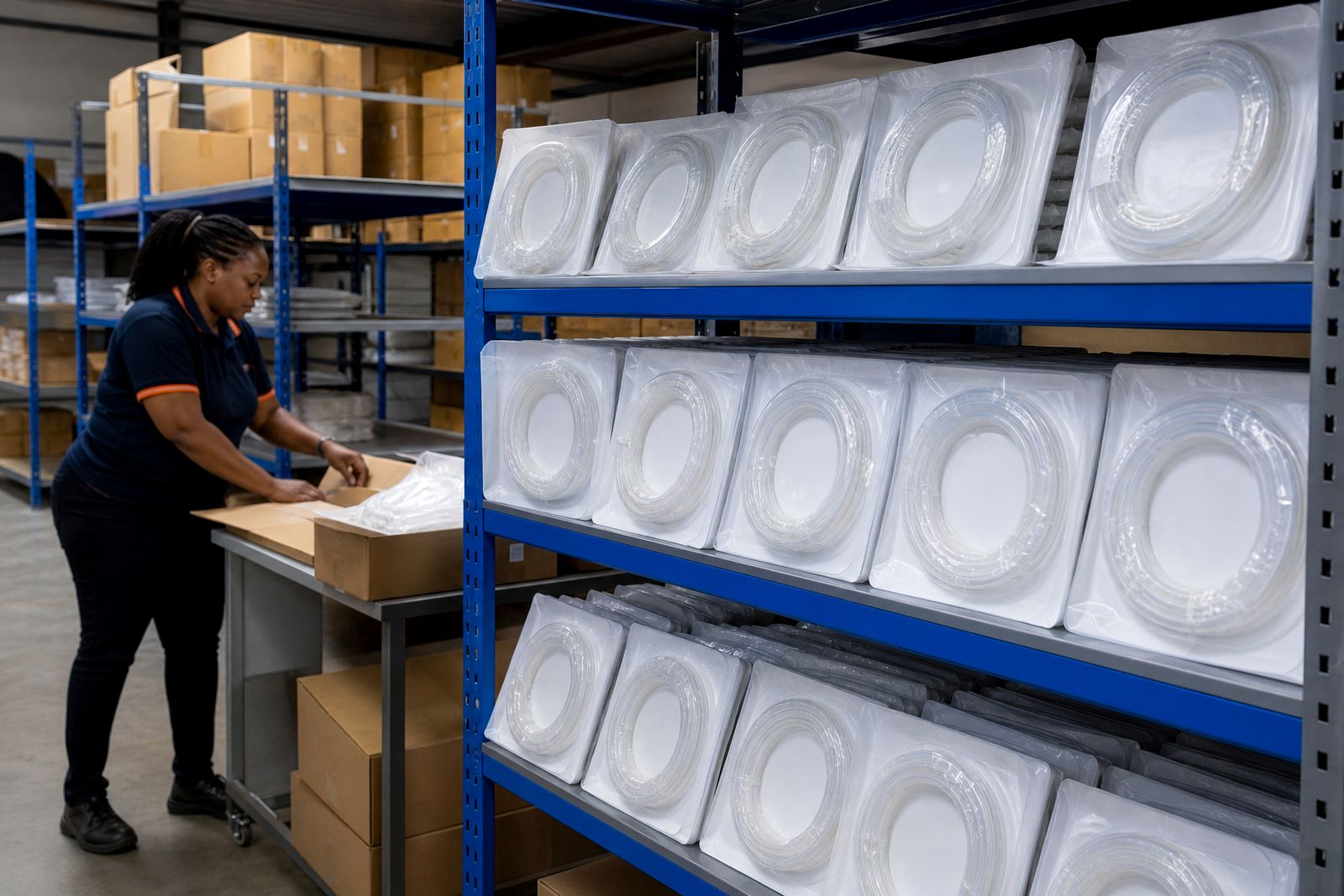
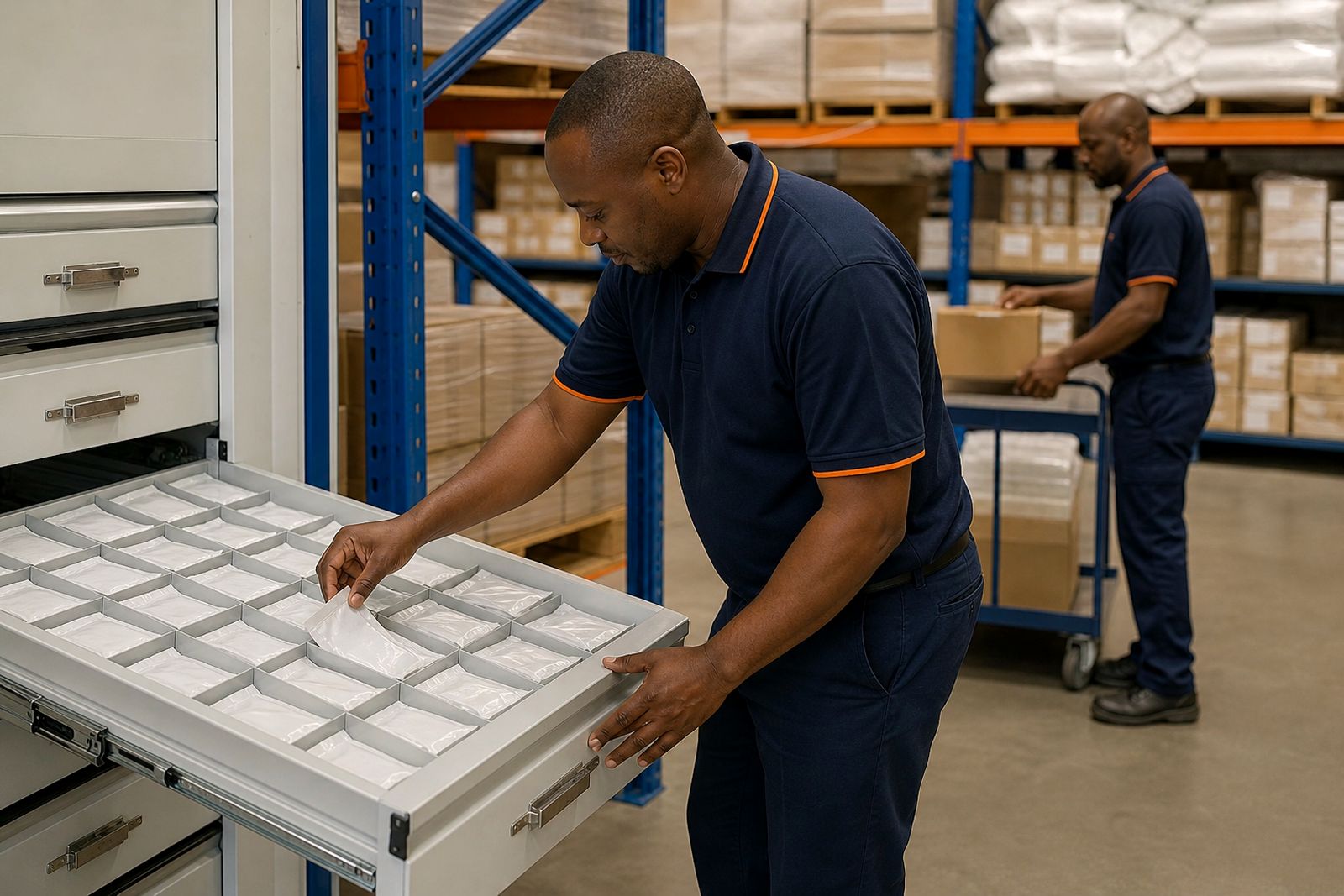
The service covers order confirmation, picking, packing, labelling and handover to a courier route suited to medical consumables. Consignments are packed by line item and checked against the order before dispatch. Outer cartons are marked for receiving staff so units can reconcile deliveries quickly on arrival.
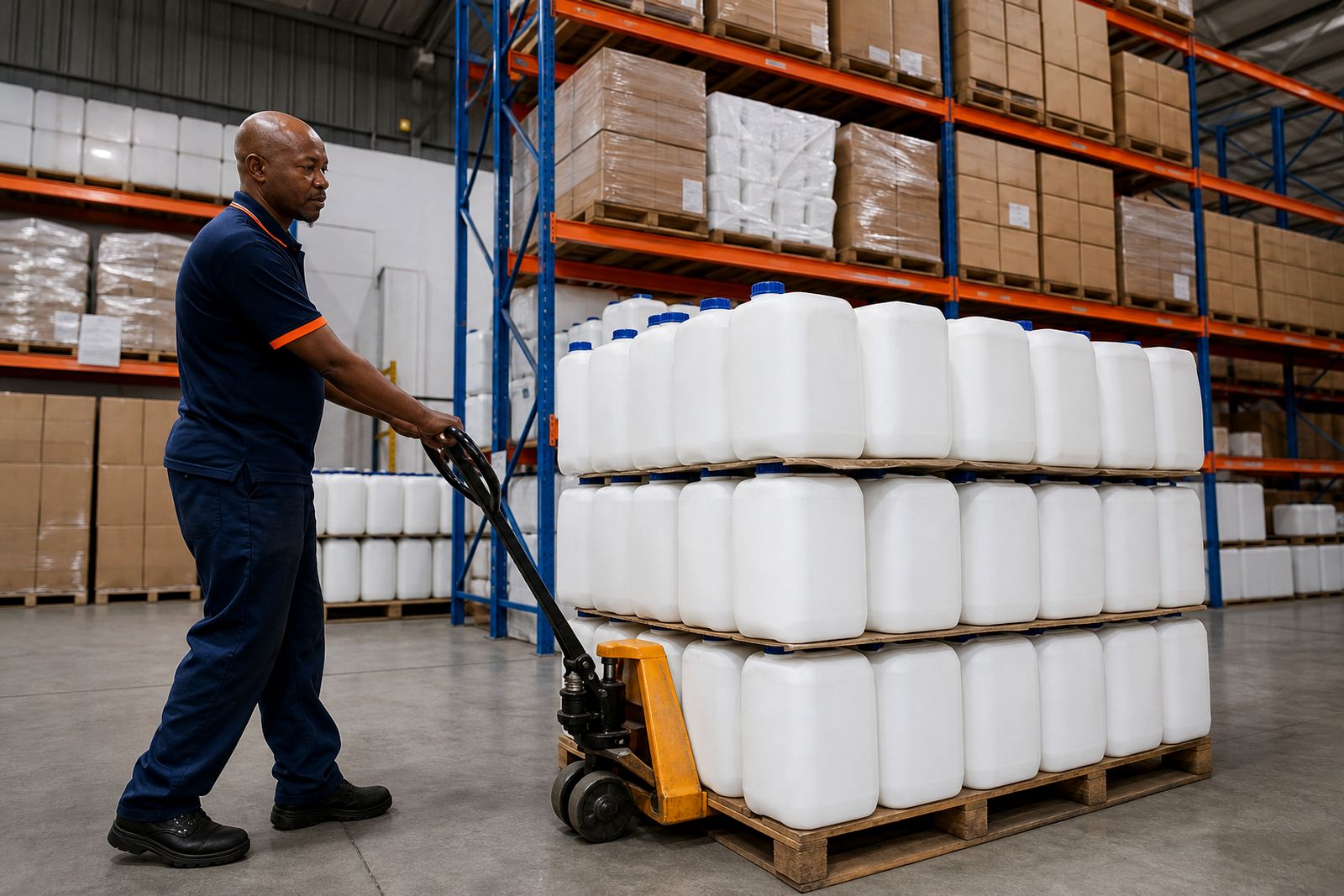
For concentrates and disinfectants, we take extra care with carton condition and upright packing where required. Mixed orders are grouped to reduce confusion at goods receiving, and supporting documents are prepared so the unit can match cartons to the purchase order and internal stores process. If a unit has site-specific receiving rules, these should be provided when placing the order.
- Order review against requested items and quantities
- Packing by product type to help receiving teams
- Dispatch documentation for easier checking on arrival
- Courier booking to the delivery point supplied by the unit
- Follow-up support if there is a delivery query or transit damage report
How the process works step by step
First, the unit sends an enquiry with the required items, quantities, delivery address and preferred receiving window. We then confirm the order details and whether the address falls within a next-day lane or a scheduled route. Once confirmed, the order is prepared in Midrand and booked with the courier.
After dispatch, the shipment moves overnight or on the next available route to the major centre concerned. On the delivery day, the unit's receiving team checks the number of cartons, carton condition and paperwork before signing. If there is any issue, the unit should report it promptly through the same contact route so it can be traced while the shipment record is still active.
- Send enquiry with item list, quantities and delivery details
- Receive confirmation of route timing and order acceptance
- Order is picked, packed and labelled at our Midrand base
- Courier collects and moves the consignment to the destination hub
- Receiving team checks cartons and documents on arrival
- Any discrepancy or visible transit damage is reported soon after receipt
What your unit must prepare before dispatch
Good delivery results depend on accurate receiving information. Please make sure the delivery address matches the actual receiving point, not only the site name. In larger campuses this matters a lot, especially where there are separate stores entrances, restricted vehicle access or municipal delivery time rules. A missing bay number or wrong entrance can push a next-day consignment into a later handover.
Units should also check that ordered quantities fit their storage conditions and stock rotation plan. Concentrates and disinfectants should be received into clean dry storage away from excess heat and direct sun. In coastal areas, humidity can affect outer cartons over time, so deliveries should be packed away soon after receipt not left in open loading areas.
- Full delivery address including unit name, building and receiving point
- Contact role for receiving, such as stores or unit administrator
- Preferred delivery hours and any site restrictions
- Purchase order or internal reference if your process requires one
- Prepared storage space for cartons and liquids on arrival
How courier pricing is worked out
Courier charges are not a flat national rate. In general, pricing depends on the destination, the number of cartons, volumetric size, total mass and whether the shipment includes heavier liquid products such as acid or bicarbonate concentrates and disinfectants. Remote routes and addresses outside the main overnight network are usually handled on a scheduled basis rather than a straight next-day run.
Access conditions can also affect the delivery cost in practical terms. Sites with strict receiving windows, after-hours restrictions, security procedures or re-delivery requirements may need a different booking approach. We therefore work from the actual order and destination details instead of publishing blanket courier figures, and we confirm the delivery method as part of the order process.
If your unit places regular replenishment orders, it often helps to group compatible items into planned consignments. That can reduce repeated small shipments and make receiving easier for your stores team.
Aftercare, receiving checks and delivery support
Once the shipment arrives, the receiving team should count cartons, inspect the outer packaging and compare the paperwork to the purchase order. Any visible transit issue should be noted at delivery and reported promptly through our contact page. This helps us follow up while courier scan events and handover records are current.
After unpacking, products should be moved into suitable storage and rotated according to your internal stock process. Keep cartons off damp floors, protect them from direct heat and avoid leaving liquids in hot vehicles or exposed receiving bays. During power cuts, units should keep store rooms closed where possible to maintain a more stable environment, especially in warmer inland conditions.
If there is a practical delivery query, such as a missing carton count, damaged outer box or address correction for a future order, we assist with the courier follow-up and update the delivery notes for the next consignment. We keep the process straightforward and operational, because receiving teams need answers quickly.
What our Dialysis Supplies customers say
Verified Google reviews
Questions we get asked
Can you send next-day courier anywhere in South Africa?
Next-day delivery is available to major centres where the courier network supports an overnight lane. Addresses outside those routes are usually handled on a scheduled delivery basis.
What details should we include when placing an order?
Please include the items required, quantities, full delivery address, receiving hours, unit reference and any site access notes. Clear delivery information helps avoid delays.
What should we do if a carton arrives damaged?
Check the shipment at delivery, note visible damage with the receiving team and report it promptly through our contact page. Early reporting makes courier follow-up much easier.
Also worth a look

Open an account or ask for a quote
Send a note through our contact form with your renal unit, what you use each month and your delivery address, and our sales team will contact you.
Open the contact form