

Storage and stock rotation
An orderly store room helps a renal unit receive, identify and issue fistula needle packs without confusion. This guide covers practical storage checks, rotation steps and receiving routines for registered renal units.

Set up the store room for easy checking
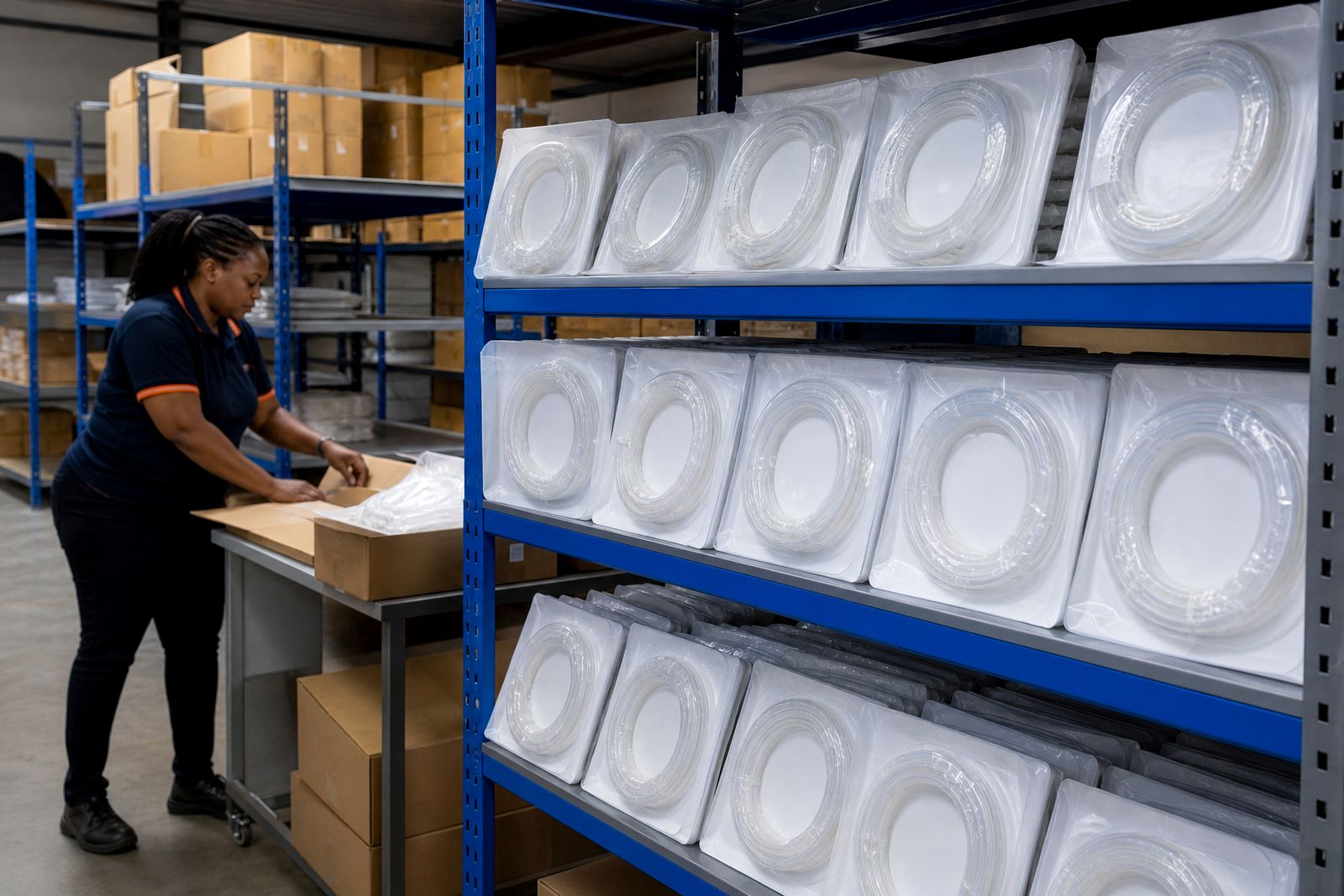
The first step is to make the store room simple to read at a glance. Fistula needle packs should be kept in a clean, dry area away from direct sun, floor damp and unnecessary handling. Shelving should allow cartons to sit flat and stable, with clear aisle space so staff can read labels without moving half a bay to reach one box.
In Midrand and other inland areas, heat can build up quickly in closed rooms during power cuts, while coastal sites may need extra attention to humidity and carton condition. Keep stock away from windows, leaking walls, air-con drip points and cleaning chemical splash zones. If the room is shared with other consumables, mark dedicated shelf space for each needle pack line so that similar outer cartons do not get mixed.
- Use shelf labels that match the product description on the carton.
- Keep cartons off the floor on shelving or pallets.
- Leave enough gap from the wall for cleaning and visual inspection.
- Store heavier cartons on lower shelves to reduce handling strain.
- Keep a small quarantine area for any damaged or unidentified cartons.
Receive deliveries with a standard routine
Good stock rotation starts at the receiving point, not when the shelf is already full. When a delivery arrives, check the outer cartons before they are signed in and packed away. Look for crushed corners, water marks, broken tape, punctures or signs that cartons were stacked badly in transit. If there is visible damage, separate the affected cartons and note the issue through your unit's normal receiving process.
Count cartons against the delivery paperwork and confirm that the product description and pack details match what was ordered. Do not place new stock straight in front of older stock before the dates are checked. This one habit causes many rotation problems later on.
- Check carton count before stock is moved into the store room.
- Read the label on every carton line received.
- Separate damaged cartons from accepted stock.
- Confirm date marking is present and legible.
- Move stock to the correct shelf on the same day where possible.
If your unit receives scheduled deliveries further afield, plan receiving around staff availability so boxes are not left standing in passages for long periods. A short delay is manageable, but cartons should not sit in uncontrolled conditions longer than necessary.
Use first-expiry-first-out every time
For fistula needle packs, first-expiry-first-out is the safest and simplest rotation method for day-to-day stores control. After receiving, compare the newly arrived stock with what is already on the shelf. Place earlier-dated stock in the front pick position and move later-dated stock behind it. If the dates are the same, keep cartons from the same batch together where practical.
Rotation only works if it is done on every delivery and checked during issuing. A quick glance once a week is usually not enough in a busy unit. Staff collecting stock for clinical areas should be able to take from the front row without opening several cartons to find the right one. Keep the pick face neat and do not overstack loose packs where labels cannot be seen.
Where carton markings are small, add a shelf-edge note showing the nearest expiry in that location. This saves time during checks and makes older stock easier to spot. It also helps when relief staff are covering the store room, which happens often enough.
Run a weekly shelf check
A short weekly check prevents month-end surprises. The aim is not a full stocktake every time, but a practical inspection that picks up date order errors, carton damage and drifting shelf organisation. Start at one end of the room and work shelf by shelf in the same sequence each week.
- Check that the front carton or front pack has the earliest date in that product line.
- Look for opened cartons that should be consolidated.
- Remove dust and keep labels visible.
- Inspect for damp, pests or crushed packaging.
- Confirm quarantine stock is still clearly separated.
- Note lines that are moving faster or slower than expected.
If a line has mixed dates across several shelves, bring it back into one clear sequence. Small corrections done weekly are far easier than a major sort-out later. It also helps buyers plan more accurately when the shelf layout reflects the real issue pattern and not last month's packing shortcuts.
Handle damaged, short-dated or unclear stock properly
Any carton with unclear labelling, damage or signs of poor storage should be set aside from issuable stock until it is reviewed under the unit's normal process. Do not place it back on the shelf just to keep the room tidy. A marked quarantine area avoids accidental issue and makes follow-up easier for the stores team.
Short-dated stock should be identified early so the unit can plan its own internal use and ordering. The practical point is early visibility, not last-minute scrambling. Keep a simple list of lines that need attention and review it during ordering. Where cartons are opened, make sure partial quantities remain with the correct product identification and date details.
If outer cartons become weak from humidity or rough handling, transfer them carefully to a clean support carton only if the original identifying information stays attached and readable. Loose packs must never end up as an unmarked pile on a shelf, even for a day or two.
Keep records simple and useful
The best stores records are the ones staff will actually keep up to date. For fistula needle packs, a basic shelf map, a receiving log and a short weekly check sheet are usually enough to improve control. The records should support the physical layout, not compete with it. If shelf labels say one thing and the spreadsheet says another, staff will follow the shelf in front of them.
For units in Johannesburg, Pretoria, Midrand and other major centres receiving next-day courier, regular smaller deliveries may reduce crowding and make rotation easier. Units further afield on scheduled deliveries may prefer a little more buffer stock, but that makes disciplined date rotation even more important.
- Record the date received and where the stock was placed.
- Note any delivery damage on arrival.
- Keep a list of lines approaching review dates set by your unit.
- Use one standard format for all store staff.
- Review shelf organisation after busy periods or room moves.
If your team follows the same routine each time, the store room stays orderly with much less effort. A clean receiving process, visible dates and steady weekly checks usually solve most rotation problems before they affect ordering or issue.
What our Dialysis Supplies customers say
Verified Google reviews
Questions we get asked
Should fistula needle packs be stored on the floor if the room is full?
No. Keep cartons off the floor on shelving or pallets to reduce risk from damp, dirt and accidental damage.
What stock rotation method should our renal unit use?
Use first-expiry-first-out so the earliest-dated stock is issued first, with later-dated stock placed behind it.
Can we order fistula needle packs as a member of the public?
No. We supply dialysis consumables to registered renal units only. Please use the enquiry form on our contact page for unit purchasing enquiries.
Also worth a look



Open an account or ask for a quote
Send a note through our contact form with your renal unit, what you use each month and your delivery address, and our sales team will contact you.
Open the contact form