

Bloodlines
Bloodlines are sterile tubing sets used on haemodialysis machines to carry blood between the patient access, the pump and the dialyser. We supply sealed packs to registered renal units only, with practical guidance on ordering, storage and delivery.
What bloodlines are
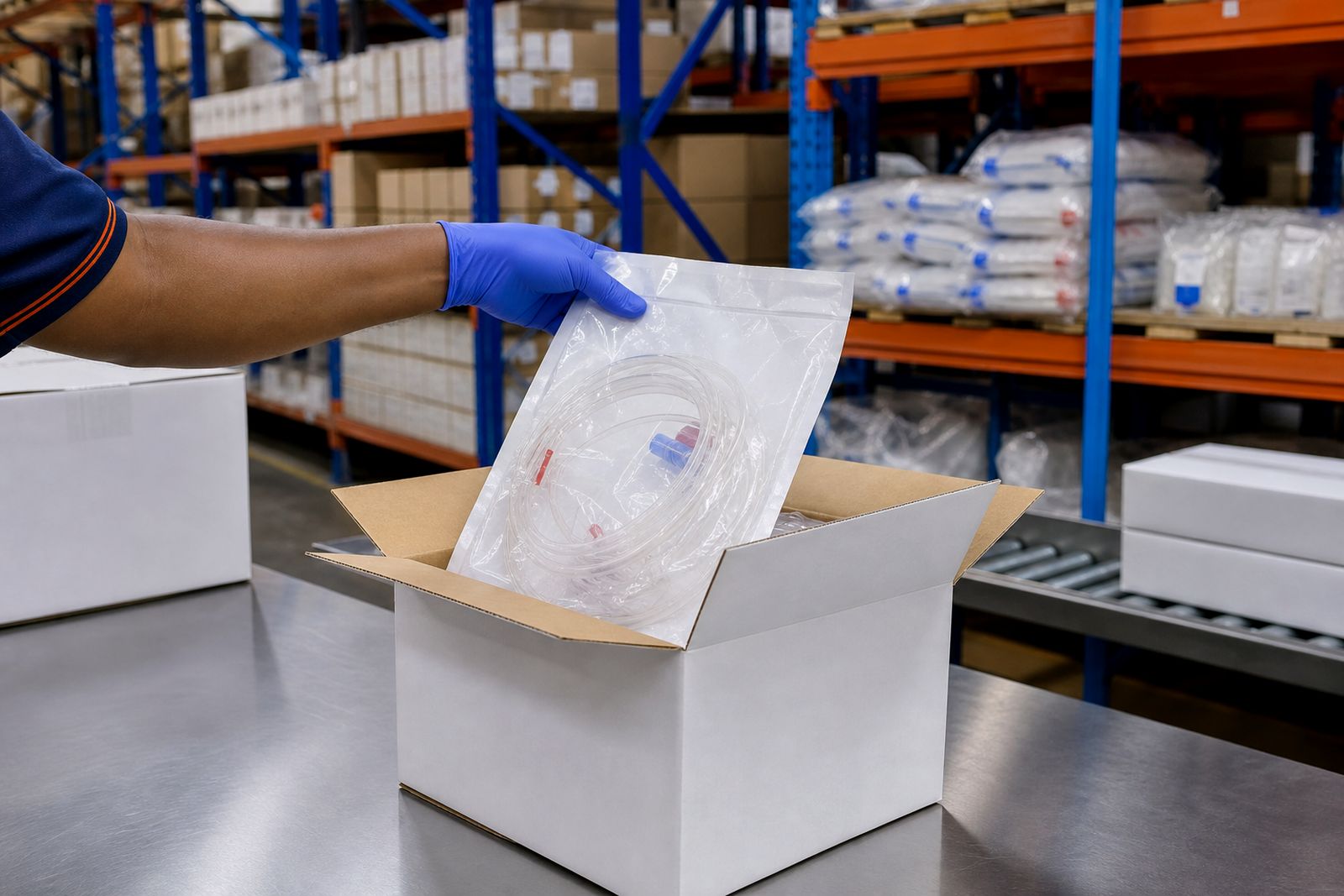
Bloodlines are single-use extracorporeal tubing sets supplied sterile and sealed, ready for use by trained renal staff within a registered unit. A set typically includes arterial and venous limbs, pump segment sections, connectors and monitoring line sections arranged to suit a compatible haemodialysis setup.
We distribute bloodlines for routine unit purchasing only. We do not supply to the public and we do not provide patient-specific product selection, treatment advice or setup instructions. If your unit is standardising stock across several stations, we can help you match the ordering description to the tubing format you already use, which avoids receiving a pack that does not suit your machine layout.
- Supplied in sealed sterile packs
- For use by registered renal units only
- Ordered by pack description and unit requirement
- Delivered from Midrand with next-day courier to major centres
Sizes, options and working limits
Bloodlines are not one-size-fits-all. Units usually order according to line length, pump segment size, connector style, transducer protector arrangement and the flow range the set is intended to support. The right option depends on the machine configuration used in your ward or dialysis area, the dialyser connection format and your established unit protocol.
When comparing options, look at the practical working range rather than only the overall tubing length. A line set that is suitable for lower or standard flow programmes may not be appropriate where your unit regularly runs higher prescribed pump speeds. Equally, a line arrangement that suits one machine family may be awkward in a room with different monitor positions or line routing.
- Arterial and venous limb lengths can vary by set type
- Pump segment dimensions must match the installed blood pump format
- Connector types must match the dialyser and access setup used by the unit
- Pressure monitoring sections and protector placement may differ
- Priming volume varies and should be checked against your unit requirement
If your team needs a like-for-like replacement, send the full pack description from your current carton or pouch label when you enquire. That is the quickest way to avoid confusion, especially where similar sets differ only in one connector or segment detail.
Where bloodlines suit and where they do not
These products suit established renal facilities, satellite units and hospital-based dialysis areas that buy consumables in planned quantities for trained clinical staff. They are appropriate where the unit already knows the machine compatibility and line configuration it requires and needs dependable repeat supply.
They do not suit home users, casual once-off retail buyers or anyone looking for treatment guidance. They also do not suit a unit that is unsure about compatibility and expects a supplier to make a clinical choice on its behalf. We can assist with ordering descriptions and product category matching, but the final selection must come from the registered renal unit.
- Suitable for registered renal units and scheduled consumables purchasing
- Suitable for recurring orders and standing order planning
- Not supplied to the public
- Not intended for patient-directed buying or self-selection
- Not a substitute for unit protocol or machine compatibility checks
Installation and site requirements
Bloodlines should be received, checked and used within the controlled procedures of the renal unit. Before a new batch is booked in, your stores or receiving team should confirm the product description on the outer carton, inspect for transport damage and check that individual sterile packs remain sealed. Any discrepancy should be raised before the packs are distributed to stations.
On site, the main requirement is simply a clean, dry storage area with enough shelving or bin space to keep cartons off the floor and out of direct sun. In Gauteng this is usually straightforward, while coastal sites may need a little more care around humidity and carton handling during wet weather. Packs should remain in their sealed condition until required and should be rotated in line with your unit's stock issue process, first in first out is usually the safest routine.
Storage, handling and routine care
As sterile consumables, bloodlines do not need maintenance in the way equipment does, but they do need sensible storage and handling. Avoid crushing cartons under heavier supplies and do not store them where there is a risk of leaks from cleaning chemicals, roof seepage or damp walls. During power cuts, make sure emergency lighting in stores is adequate so staff can still read labels clearly and pick the correct line set.
General good practice includes checking carton labels on arrival, rotating stock by date sequence according to your internal procedure and separating similar-looking variants to reduce picking errors. If a pack is torn, wet or otherwise compromised, set it aside and let your unit follow its normal non-conformance process.
- Keep cartons clean, dry and off the floor
- Protect from direct sunlight and excess heat
- Do not use packs with damaged sterile barriers
- Separate similar variants to avoid selection errors
- Record batch details in line with your unit procedure where required
What to tell us when you enquire
The fastest way to get the right response is to send a clear enquiry through our contact page with the full product description your unit currently uses. Include the bloodline type, connector details, the quantity required and whether this is for a once-off order, a monthly call-off or a standing order pattern. If your stores team has a photo of the pouch label or carton end label, that helps a lot.
Please also tell us where the order must be delivered, whether your site is in Midrand, Johannesburg, Pretoria or a major centre for next-day courier, and whether there are receiving-hour restrictions at the unit. Some facilities only accept deliveries during specific weekday windows and this can affect dispatch timing a bit.
- Registered renal unit name and delivery town
- Full bloodline description from current packaging
- Required quantity and preferred delivery timing
- Whether you need once-off supply or recurring scheduled delivery
- Any receiving restrictions or booking-in requirements
Clients reach us through the enquiry form on our contact page. We will reply on the basis of unit supply and delivery arrangements only, without providing clinical advice or patient-specific recommendations.
What our Dialysis Supplies customers say
Verified Google reviews
Questions we get asked
Do you supply bloodlines to private individuals?
No. We supply dialysis consumables to registered renal units only and do not sell to the public.
Can you tell us which bloodline a patient should use?
No. Product selection must come from the registered renal unit. We can assist with ordering descriptions and supply logistics only.
What should we send with an enquiry for bloodlines?
Send the full pack description from your current label, the quantity required, your delivery town and any receiving restrictions through the contact page enquiry form.
Also worth a look

Open an account or ask for a quote
Send a note through our contact form with your renal unit, what you use each month and your delivery address, and our sales team will contact you.
Open the contact form